The Blog

How Much Protein Do You REALLY Need on GLP-1 Medications? A Nurse’s Guide
If you’re on Ozempic, Wegovy, Mounjaro, or Zepbound, you’ve probably heard conflicting advice about protein. Some people say you need way more protein on GLP-1s, while others claim it doesn’t matter as long as you’re eating something. And then there’s the crowd insisting you’ll waste away to nothing if you don’t hit some impossibly high number.
So, then, what’s the truth?
As an Ivy League education psychiatric registered nurse who’s lost 155 pounds on GLP-1 medications while maintaining my muscle mass through heavy lifting, I’m here to give you the real answer, backed by science, informed by my clinical background, and proven by my own experience.
Let’s cut through the noise and talk about how much protein you actually need on semaglutide, tirzepatide, or any other GLP-1 medication.
Why Protein Matters Even More on GLP-1 Medications
Here’s the thing: GLP-1 medications are incredibly effective at helping you lose weight. I’m living proof! But here’s what nobody tells you when you start: your body doesn’t discriminate between fat loss and muscle loss when you’re in a caloric deficit.
When you’re eating significantly less (thanks to that appetite suppression we all know and love), your body needs a signal to hold onto your muscle. What’s that signal? Protein!
What Happens When You Don’t Get Enough Protein on GLP-1s
I’ve seen this happen to people in online communities, and honestly, it breaks my heart:
- Muscle loss (which slows your metabolism and makes you look “skinny fat” and saggy)
- Fatigue and weakness (your body is literally breaking down muscle for energy)
- Hair thinning or loss (your body prioritizes vital functions over hair growth)
- Saggy, loose skin (muscle provides structure under your skin)
- Difficulty maintaining weight loss (less muscle = lower metabolic rate)
I’m not trying to scare you. I’m trying to save you from what I see happening to so many people who focus only on the scale number.
The Science: So How Much Protein Do You Need on GLP-1 Medications?
Let’s talk actual numbers. Research on protein needs during weight loss is pretty clear, and it applies even more when you’re on appetite suppressing medications.
The General Recommendation
For people on GLP-1 medications who want to preserve muscle mass, aim for 0.8 to 1.0 grams of protein per pound of your goal body weight.
Let me break that down:
- If your goal weight is 150 lbs → Aim for 120-150 grams of protein per day
- If your goal weight is 180 lbs → Aim for 145-180 grams of protein per day
- If your goal weight is 200 lbs → Aim for 160-200 grams of protein per day
“Wait,” you might be thinking, “that seems like a LOT when I can barely eat!”
I know. Trust me, I know. But here’s the reality: it’s not optional if you want to keep your muscle.
Why This Number Is Higher Than “Normal” Recommendations
You might have heard that the RDA (Recommended Dietary Allowance) for protein is only 0.36 grams per pound of body weight. That’s true, BUT that recommendation is for sedentary people who are maintaining their weight.
You’re not maintaining. You’re losing! And if you’re smart (which you are, because you’re reading this), you’re also incorporating resistance training.
When you’re in a caloric deficit—which you definitely are on GLP-1s—your protein needs go UP, not down. This is backed by multiple studies showing that higher protein intake during weight loss:
- Preserves lean muscle mass
- Increases satiety (helps you feel fuller)
- Supports metabolic rate
- Improves body composition
Your Personal Protein Calculator
Let’s figure out YOUR specific protein target.
Step 1: Determine Your Goal Weight
What’s a realistic, healthy weight for you? Don’t pick some number from high school. Pick a weight where you:
- Feel strong and energetic
- Can maintain your lifestyle
- Have a healthy body composition
Step 2: Calculate Your Protein Range
Minimum: Goal Weight × 0.8 = _____ grams per day
Optimal: Goal Weight × 1.0 = _____ grams per day
Step 3: Adjust Based on Your Activity Level
- Sedentary (little to no exercise): Stick to the lower end (0.8g per lb)
- Lightly active (walking, light yoga): Aim for middle range (0.9g per lb)
- Moderately active (regular workouts 3-4x/week): Hit the higher end (1.0g per lb)
- Very active (heavy lifting 5+ days/week like me): Consider 1.0-1.2g per lb
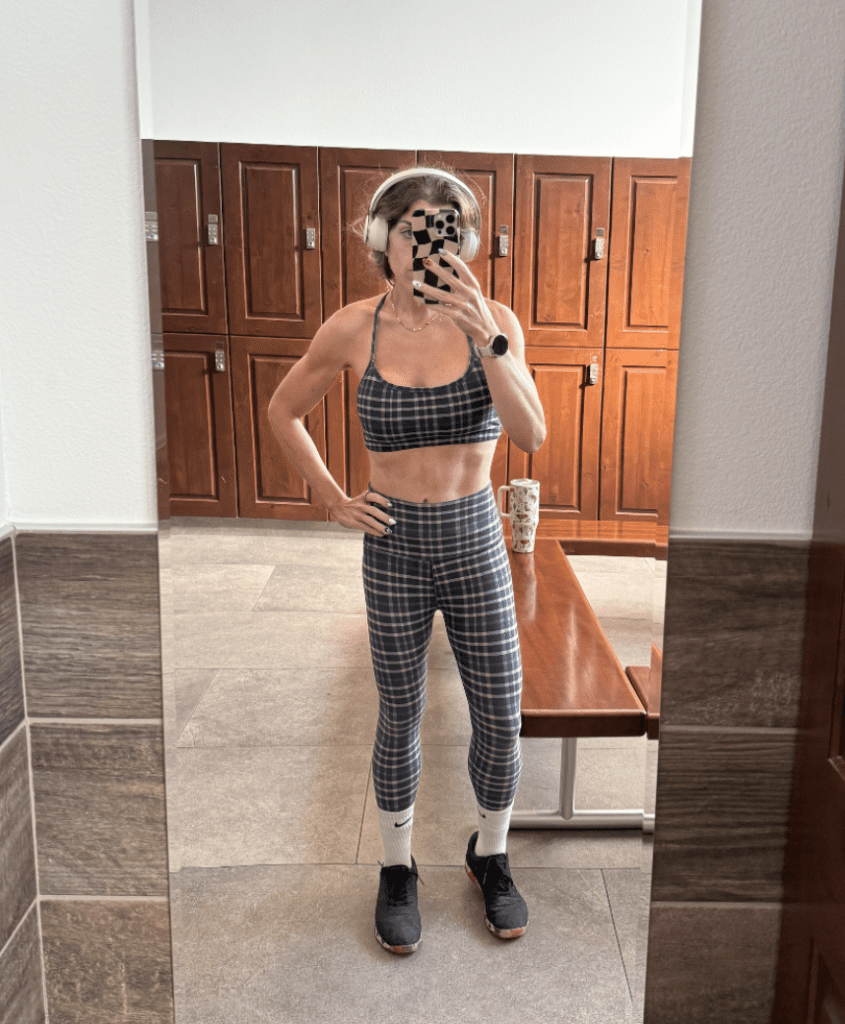
My Personal Example
I’m currently 125 lbs at 5’5″, and I’m in maintenance mode after losing 155 pounds. Here’s my calculation:
- Minimum: 125 × 0.8 = 100 grams per day
- Optimal: 125 × 1.0 = 125 grams per day
Since I lift heavy 5 days a week plus cardio, I aim for 120-130 grams daily. Some days I hit 110g and that’s fine. Some days I get 140g. The key is consistency, not perfection.
At my height and activity level, this protein intake helps me maintain the muscle I built during my weight loss journey and supports my strength training goals.
Common Mistakes People Make With Protein on GLP-1s
In my online communities and through my “That GLP-1 Girl” content, I see these mistakes over and over:
Mistake #1: “I’m Not Hungry, So I’ll Just Skip Protein”
I get it. The appetite suppression is REAL. Some days, the thought of eating feels like a chore. But defaulting to just carbs or skipping meals entirely because you’re not hungry means you’re missing the nutrients your body desperately needs during weight loss, especially protein and fiber.
The fix: Prioritize protein FIRST at every meal, but don’t forget fiber. Your plate should look like this:
- Protein first (chicken, fish, eggs, Greek yogurt)
- Fiber rich vegetables second (broccoli, spinach, Brussels sprouts)
- Healthy carbs last if you still have room (quinoa, sweet potato, whole grains)
This order ensures you’re getting the muscle preserving protein AND the fiber you need for digestion and gut health (trust me, constipation on GLP-1s is no joke). Eating protein with fiber rich veggies also helps with satiety and blood sugar stability.
Mistake #2: “I’ll Just Drink Protein Shakes All Day”
Protein shakes are a tool, not a solution. While they’re great for supplementing, relying on them exclusively means you’re missing out on:
- Essential nutrients from whole foods
- The satiety benefits of chewing
- The thermic effect of digesting whole proteins (your body burns more calories digesting chicken than powder)
The fix: Use shakes strategically (post workout, busy mornings), but aim for at least 2 meals with whole food protein sources.
Mistake #3: “More Protein = Faster Weight Loss”
No. More protein = better muscle preservation. Weight loss comes from being in a caloric deficit, which GLP-1s help you achieve by reducing appetite amongst other things.
Eating 200+ grams of protein won’t make you lose faster. It might actually slow your loss if it puts you in a caloric surplus.
The fix: Hit your protein target, but don’t go overboard thinking it’s magic.
Mistake #4: “I Can Get All My Protein at Dinner”
Your body can only synthesize so much muscle protein at once. While you won’t “waste” protein from a large meal (your body will use it for other functions), you’ll get better muscle preservation by spreading protein throughout the day.
The fix: Aim for 30-50 grams of protein per meal, 3-4 times per day.
Mistake #5: “Plant Protein Is Just as Good”
Look, I’m not anti-plant protein. But the reality is that animal proteins are complete proteins with all essential amino acids in optimal ratios. Most plant proteins are incomplete and less bioavailable.
If you’re vegetarian or vegan, you absolutely CAN get enough protein: you just need to be more strategic about combining sources and likely eating more volume.
The fix: If you eat animal products, include them. If you don’t, focus on complete plant proteins like quinoa, soy, and combine legumes with grains.
How to Actually Hit Your Protein Goals When You’re Not Hungry
This is the million dollar question, right? Here’s what works for me:
Strategy #1: Protein-Dense Foods
Choose foods that pack maximum protein in minimum volume:
- Greek yogurt (20g protein in 1 cup)
- Cottage cheese (25g protein in 1 cup)
- Chicken breast (50g protein in 6 oz)
- Eggs (6g protein each)
- Salmon (40g protein in 6 oz)
- Protein powder (20-30g per scoop)
Strategy #2: Liquid Calories Are Easier
When solid food feels impossible, liquids go down easier:
- Protein smoothies with Greek yogurt, protein powder, and fruit
- Protein coffee (add protein powder to your morning coffee)
- Bone broth (yes, it has protein!)
- Orgain protein shakes (30g protein, tastes like chocolate milk)
Strategy #3: Front Load Your Protein
Eat protein when you’re hungriest, usually earlier in the day:
- Protein packed breakfast (eggs, Greek yogurt, protein pancakes)
- High protein lunch
- Lighter dinner if appetite is gone by evening
Strategy #4: Make Every Bite Count
When you can only eat small amounts, make it protein:
- Skip the bread, eat the turkey
- Pass on chips, have the chicken
- Choose protein bars over granola bars
What This Looks Like in Real Life
Here’s a sample day of eating for me to hit 150g protein:
Breakfast (7am):
- 3 eggs scrambled (18g)
- 1/2 cup cottage cheese mixed in (12g)
- 1 slice whole grain toast
- Total: 30g protein
Mid Morning (10am):
- Orgain protein shake (30g)
- Total: 30g protein
Lunch (1pm):
- 6 oz grilled chicken breast (50g)
- Side salad with vinaigrette
- Total: 50g protein
Afternoon Snack (4pm):
- Greek yogurt with berries (20g)
- Total: 20g protein
Dinner (6:30pm):
- 5 oz salmon (35g)
- Roasted vegetables
- Total: 35g protein
Daily Total: 165g protein
Notice I’m not eating huge volumes. I’m strategic about WHAT I eat.
When to Worry (And When to Relax)
You Should Be Concerned If:
- You’re consistently getting less than 0.6g per lb of goal weight
- You’re noticing muscle loss or weakness
- Your hair is thinning significantly
- You’re exhausted all the time despite adequate sleep
- You’re losing weight too rapidly (more than 2 lbs per week consistently)
You’re Doing Fine If:
- You’re hitting 0.8-1.0g per lb most days
- You have energy for your workouts
- You’re maintaining or building strength
- Your hair, skin, and nails look healthy
- You’re losing 1-2 lbs per week on average
The Bottom Line on Protein and GLP-1 Medications
Here’s what I want you to remember:
Your protein needs on GLP-1 medications are HIGHER than normal, not lower. Aim for 0.8-1.0 grams per pound of your goal body weight. It sounds like a lot when you have no appetite, but it’s non-negotiable if you want to keep your muscle.
I lost 155 pounds. I maintained my muscle mass. I’m stronger now than I’ve ever been in my life. And the single most important factor? Prioritizing protein every single day.
You’re on these medications to transform your life, not just to see a smaller number on the scale. Don’t shortchange yourself by neglecting the one thing that will help you build the strong, healthy body you deserve.
Your Action Steps Right Now
- Calculate your protein target using your goal weight × 0.8-1.0
- Track your protein for 3 days to see where you actually are (you might be surprised how low it is)
- Identify 5 protein sources you actually enjoy eating
- Plan tomorrow’s meals with protein as the priority
- Follow me on TikTok @JessicaRockowitz for daily tips on all things obesity medicine and mental health!
You’ve got this! Your future self—the one who’s not just thin, but STRONG—will thank you for prioritizing protein today.
About the Author: Jessica is an Ivy League educated registered nurse and a PMHNP student at Vanderbilt University. She’s lost 155 pounds on GLP-1 medications while maintaining muscle mass through consistent resistance training. She shares her journey and evidence based tips on TikTok as @JessicaRockowitz and Instagram as @JessicaRockowitz, where she’s building a community focused on mental health and weight loss.


Wow!! Boy did I need that! What great information. I’ve been struggling with how much protein to eat and water to drink. I’ve been on Tirzepitide for 4 months and have lost 30 pounds. Need to loose 40 more to reach my goal of 125. Thank you so much for your insight!
Thank you for this information!!