<?xml version="1.0" encoding="utf-8"?><feed xmlns="http://www.w3.org/2005/Atom" ><generator uri="https://jekyllrb.com/" version="4.4.1">Jekyll</generator><link href="https://thatglp1girl.com/feed.xml" rel="self" type="application/atom+xml" /><link href="https://thatglp1girl.com/" rel="alternate" type="text/html" /><updated>2026-10-26T23:52:14+00:00</updated><id>https://thatglp1girl.com/feed.xml</id><title type="html">That GLP-1 Girl</title><subtitle>Psychiatric nurse Jessica lost 155 lbs and helps others navigate GLP-1 medications like Ozempic, Wegovy, Mounjaro &amp; Zepbound. Evidence-based tips, real talk, and sustainable strategies for your weight loss journey.</subtitle><author><name>Jessica Rockowitz</name></author><entry><title type="html">10 GLP-1 Approved High-Protein Snacks Under 200 Calories</title><link href="https://thatglp1girl.com/2026/01/04/10-glp-1-approved-high-protein-snacks-under-200-calories/" rel="alternate" type="text/html" title="10 GLP-1 Approved High-Protein Snacks Under 200 Calories" /><published>2026-01-04T00:00:00+00:00</published><updated>2026-01-04T00:00:00+00:00</updated><id>https://thatglp1girl.com/2026/01/04/10-glp-1-approved-high-protein-snacks-under-200-calories</id><content type="html" xml:base="https://thatglp1girl.com/2026/01/04/10-glp-1-approved-high-protein-snacks-under-200-calories/"><![CDATA[<p>One of the biggest challenges on GLP-1 medications is getting enough protein when you’re just not hungry. That’s where high protein snacks come in!</p>

<p>Trust me, I get it. Some days the thought of sitting down to a full meal feels impossible. After losing 155 lbs on a GLP-1, I’ve learned that snacks are honestly your secret weapon for hitting your protein goals. As a psychiatric nurse and someone who maintains 125 pounds at 13% body fat (DEXA scan verified), I live by high protein snacks. They help me hit my 120-130g daily protein target without forcing myself to eat huge meals.</p>

<p>These 10 snacks are my go-to options when I need protein but don’t have much appetite. They’re all under 200 calories, pack some serious protein, and actually taste good.</p>

<h2 id="why-high-protein-snacks-matter-on-glp-1s">Why High-Protein Snacks Matter on GLP-1s</h2>

<p>When you’re on Ozempic, Wegovy, Mounjaro, or Zepbound, your appetite is suppressed, sometimes aggressively. But your body still needs protein to:</p>

<ul>
  <li>Preserve muscle mass during weight loss</li>
  <li>Support your metabolism</li>
  <li>Keep your hair, skin, and nails healthy</li>
  <li>Maintain energy levels</li>
  <li>Support immune function</li>
</ul>

<p>Small, protein dense snacks let you get nutrients in without the overwhelm of a full meal. Think of them as little protein deposits throughout the day that add up to your total goal.</p>

<p>These snacks fill the gaps between my main meals and help me consistently hit 120g+ of protein daily.</p>

<h2 id="my-personal-favorite-high-protein-snacks-for-glp-1s">My Personal Favorite High Protein Snacks for GLP-1s</h2>

<h3 id="1-chobani-zero-sugar-greek-yogurt-with-berries">1. Chobani Zero Sugar Greek Yogurt with Berries</h3>

<p><strong>Calories:</strong> 80-100 (yogurt) + 30-50 (berries)<br />
<strong>Protein:</strong> 15g<br />
<strong>Why it works:</strong> Goes down easy when you’re not hungry, zero sugar but doesn’t taste super artificial, and the berries add natural sweetness. I rotate between Chobani and Siggi’s depending on what’s on sale. Both are creamy and actually taste good.</p>

<p><strong>Pro tip:</strong> Mix in some Purely Elizabeth granola if you need crunch (adds about 50 calories but makes it feel more like a treat).</p>

<h3 id="2-orgain-protein-shake-30g-protein-ready-to-drink">2. Orgain Protein Shake (30g protein, ready-to-drink)</h3>

<p><strong>Calories:</strong> 160<br />
<strong>Protein:</strong> 30g<br />
<strong>Why it works:</strong> This is my post-workout go-to. Plant based, so it’s easier on my stomach than whey when I’m not super hungry. The chocolate peanut butter flavor is my favorite! It tastes like a milkshake, not chalky protein powder. These are a lifesaver after lifting when I need serious protein but solid food sounds terrible.</p>

<p><strong>When I use it:</strong> After workouts or when I’m running around and realize that I haven’t eaten.</p>

<h3 id="3-string-cheese-2-sticks">3. String Cheese (2 sticks)</h3>

<p><strong>Calories:</strong> 160<br />
<strong>Protein:</strong> 12-14g<br />
<strong>Why it works:</strong> Portable, no prep, individually wrapped. I throw these in my gym bag, purse, car. They’re my emergency protein when I’m out and realize I’ve barely eaten all day.</p>

<p><strong>Brand matters:</strong> Sargento or Frigo are my favorites because they actually taste like cheese, not rubber.</p>

<h3 id="4-hard-boiled-eggs-2-eggs">4. Hard Boiled Eggs (2 eggs)</h3>

<p><strong>Calories:</strong> 140<br />
<strong>Protein:</strong> 12g<br />
<strong>Why it works:</strong> Cheap, easy to meal prep on Sundays or snag at the grocery store, and one of the most bioavailable protein sources. I keep them in the fridge all week for quick grabs.</p>

<p><strong>Hate plain eggs?</strong> Sprinkle with Everything But the Bagel seasoning from Trader Joe’s. Game changer.</p>

<h3 id="5-good-culture-cottage-cheese-12-cup">5. Good Culture Cottage Cheese (1/2 cup)</h3>

<p><strong>Calories:</strong> 80-90<br />
<strong>Protein:</strong> 14g<br />
<strong>Why it works:</strong> This is the cottage cheese for people who think they hate cottage cheese. It’s creamy, not weirdly chunky, and it has ridiculous protein for the calories. Plus Trader Joe’s has that protein cottage cheese that’s even higher in protein.</p>

<p><strong>How I eat it:</strong> Mixed with berries for sweet, or with cherry tomatoes and black pepper for savory.</p>

<h3 id="6-barbell-or-david-protein-bars">6. Barbell or David Protein Bars</h3>

<p><strong>Calories:</strong> 180-210<br />
<strong>Protein:</strong> 20g<br />
<strong>Why it works:</strong> For when you need an easily accessible protein. I keep these in my car, gym bag, and in my office at work. They save me when I’m starving but won’t be home for hours. <a href="https://shop.barebells.com/product/barebells-chocolate-dough-protein-bar/?srsltid=AfmBOop_1XL-Hbvcp_4buCDtPFH0WjV471g6H23eYN9RkZhTwTU4EryV">Barbell Chocolate Dough</a> bars taste like actual dessert, and David Peanut Butter Chocolate Chip bars don’t have too much of a weird artificial aftertaste.</p>

<p><strong>My rotation:</strong> Barbell cookie dough, Built Bar cookie dough (yes, I’m a cookie dough person), and David peanut butter chocolate chip.</p>

<p><strong>Warning:</strong> Most protein bars are candy bars in disguise. These actually have 20g protein and aren’t pure sugar.</p>

<h3 id="7-edamame-1-cup-shelled">7. Edamame (1 cup, shelled)</h3>

<p><strong>Calories:</strong> 190<br />
<strong>Protein:</strong> 17g<br />
<strong>Why it works:</strong> If you want a savory, salty snack that’s not cheese, this is it. Plus you get fiber (9g!), which is clutch for the GLP-1 constipation struggle. I buy the frozen bags from Trader Joe’s and microwave them.</p>

<p><strong>How to make it good:</strong> Steam it, then toss with sea salt and a tiny drizzle of sesame oil. SO GOOD.</p>

<h3 id="8-fairlife-protein-shake-core-power">8. Fairlife Protein Shake (<a href="https://fairlife.com/core-power/">Core Power</a>)</h3>

<p><strong>Calories:</strong> 230<br />
<strong>Protein:</strong> 42g<br />
<strong>Why it works:</strong> When I really need to catch up on protein fast. Tastes like chocolate milk, goes down easy even when I’m not hungry. I drink these on days when I’m way behind on my protein goal by dinner time.</p>

<p><strong>Best for:</strong> Emergency protein rescue when you’ve only eaten 60g by 6pm.</p>

<h3 id="9-tuna-packet--crackers-1-packet--10-wheat-thins">9. Tuna Packet + Crackers (1 packet + 10 Wheat Thins)</h3>

<p><strong>Calories:</strong> 180<br />
<strong>Protein:</strong> 18g<br />
<strong>Why it works:</strong> The StarKist tuna packets (flavored ones like lemon pepper or sriracha) are actually good. Pair with a few crackers for crunch, and you’ve got a satisfying snack that doesn’t require refrigeration.</p>

<p><strong>Best part:</strong> Shelf-stable. Keep them in your desk drawer, pantry, car—wherever.</p>

<h3 id="10-turkey-or-chicken-meatballs-4-5-small-frozen-ones">10. Turkey or <a href="https://www.traderjoes.com/home/products/pdp/chicken-meatballs-074578">Chicken Meatballs</a> (4-5 small frozen ones)</h3>

<p><strong>Calories:</strong> 180-200<br />
<strong>Protein:</strong> 18-20g<br />
<strong>Why it works:</strong> I buy the frozen turkey or chicken meatballs from Trader Joe’s or Costco, microwave 4-5 of them, and dip in marinara. Feels like I’m eating real food, not just “snacking.” Plus they’re pre-cooked so it takes 90 seconds.</p>

<p><strong>When I eat these:</strong> When I’m actually kinda hungry and need something more substantial than yogurt.</p>

<h2 id="what-to-look-for-in-glp-1-friendly-protein-snacks">What to Look For in GLP-1-Friendly Protein Snacks</h2>

<p>Not all “high-protein” snacks are created equal. Here’s my checklist:</p>

<ul>
  <li><strong>At least 10-15g protein</strong> (otherwise, what’s the point?)</li>
  <li><strong>Under 200 calories</strong> (you need the calorie budget for meals)</li>
  <li><strong>Low in added sugar</strong> (under 10g ideally)</li>
  <li><strong>Tastes good</strong> (if you don’t like it, you won’t eat it)</li>
  <li><strong>Easy to prepare or grab-and-go</strong> (we’re busy, GLP-1s kill motivation)</li>
</ul>

<p><strong>Avoid:</strong> Protein bars with 20g sugar, Greek yogurt with candy mix-ins, anything labeled “keto” that’s just fat bombs with 5g protein</p>

<h2 id="snacking-strategy-on-glp-1-medications">Snacking Strategy on GLP-1 Medications</h2>

<p>Know that snacks are strategic and the key to success. When you’re on semaglutide or tirzepatide, eating 3 massive protein packed meals can feel impossible, but eating smaller amounts more frequently is totally doable.</p>

<p><strong>My rule:</strong> If I’m short on protein by 3pm (under 60g), I MUST have at least 2 protein snacks before bed. Non negotiable.</p>

<p>This keeps me from:</p>

<ul>
  <li>Scrambling at 9pm realizing I’ve only eaten 70g protein all day</li>
  <li>Losing muscle mass because I’m under eating protein consistently</li>
  <li>Feeling weak during my workouts</li>
  <li>Watching my hair thin (been there, fixed it)</li>
</ul>

<h2 id="the-bottom-line-on-high-protein-snacks">The Bottom Line on High Protein Snacks</h2>

<p>GLP-1 medications are incredible for weight loss, but they don’t care if you’re getting enough protein; that’s on you. These 10 snacks have saved me countless times when I wasn’t hungry but knew I needed to eat. They’re the reason I’ve maintained my muscle mass, kept my strength up, and hit my protein goals even on days when food is the last thing I want.</p>

<p><strong>Your action step:</strong> Pick 3 snacks from this list, buy them this week, and keep them accessible. In your fridge, your gym bag, your car, your desk drawer, whatever. When you’re not hungry but need protein, you’ll have options ready.</p>

<p><strong>Want my complete GLP-1 meal and snack guide with full macros, grocery lists, and weekly meal prep routine?</strong> Snag it <a href="https://thatglp1girl.com/glp-1-food-and-grocery-guide">here.</a></p>]]></content><author><name>Jessica Rockowitz</name></author><summary type="html"><![CDATA[One of the biggest challenges on GLP-1 medications is getting enough protein when you’re just not hungry. That’s where high protein snacks come in!]]></summary><media:thumbnail xmlns:media="http://search.yahoo.com/mrss/" url="https://thatglp1girl.com/assets/images/blog/10-glp-1-approved-high-protein-snacks-under-200-calories/high-protein-snacks-glp-1.jpg" /><media:content medium="image" url="https://thatglp1girl.com/assets/images/blog/10-glp-1-approved-high-protein-snacks-under-200-calories/high-protein-snacks-glp-1.jpg" xmlns:media="http://search.yahoo.com/mrss/" /></entry><entry><title type="html">Avoiding Muscle Loss on GLP-1: What Actually Works (From Someone Who’s Done It)</title><link href="https://thatglp1girl.com/2026/01/04/avoiding-muscle-loss-on-glp-1-what-actually-works-from-someone-whos-done-it/" rel="alternate" type="text/html" title="Avoiding Muscle Loss on GLP-1: What Actually Works (From Someone Who’s Done It)" /><published>2026-01-04T00:00:00+00:00</published><updated>2026-01-04T00:00:00+00:00</updated><id>https://thatglp1girl.com/2026/01/04/avoiding-muscle-loss-on-glp-1-what-actually-works-from-someone-whos-done-it</id><content type="html" xml:base="https://thatglp1girl.com/2026/01/04/avoiding-muscle-loss-on-glp-1-what-actually-works-from-someone-whos-done-it/"><![CDATA[<p>Let’s chat about muscle loss on a GLP-1. Let me tell you something nobody warned me about when I started my GLP-1 journey: the real challenge isn’t losing weight, because these medications are incredible at that. It’s losing weight the <em>right</em> way, which involves keeping your muscle while the fat “melts off.”</p>

<p>I’ve lost 155 pounds on Mounjaro/Zepbound. I’m 5’5″ and have maintained for over a year, and I’m most proud of the fact that <strong>I’m stronger now than I was 155 pounds ago.</strong> How is that possible when so many people on GLP-1 medications end up looking “skinny fat” or lose their strength along with the weight?</p>

<p>As an Ivy League educated and Obesity Medicine Certified Registered Nurse, Certified Personal Trainer, and someone currently pursuing my PMHNP degree, I’ve combined my medical knowledge with hard won personal experience to crack the code on maintaining muscle on Ozempic, Wegovy, Mounjaro, and Zepbound.</p>

<p>If you’re worried about muscle loss on GLP-1s, or you’ve already noticed that you’re getting weaker, this post is for you. Let’s talk about what actually works, backed by science and proven by real results.</p>

<h2 id="why-muscle-loss-happens-on-glp-1-medications-and-why-you-should-care">Why Muscle Loss Happens on GLP-1 Medications (And Why You Should Care)</h2>

<p>First, let’s get clear on what’s happening in your body when you’re on semaglutide or tirzepatide.</p>

<h3 id="the-science-behind-muscle-loss-during-weight-loss">The Science Behind Muscle Loss During Weight Loss</h3>

<p>When you’re in a caloric deficit—which you absolutely are on GLP-1s thanks to that appetite suppression—your body needs energy. It gets that energy from three places:</p>

<ol>
  <li><strong>Fat stores</strong> (this is what we want)</li>
  <li><strong>Muscle tissue</strong> (this is what we DON’T want)</li>
  <li><strong>Glycogen</strong> (stored carbohydrates)</li>
</ol>

<p>Here’s the problem: <strong>your body doesn’t preferentially burn fat.</strong> Without the right signals, it breaks down whatever’s easiest. Muscle is actually easier for your body to break down than fat, especially when you’re not using it.</p>

<p>Research shows that during rapid weight loss, people can lose up to 25-30% of their total weight loss from lean muscle mass if they don’t take protective measures. Let that sink in.</p>

<p>If you lose 100 pounds and 25-30 pounds of that is muscle, you’ve:</p>

<ul>
  <li>Slowed your metabolism (muscle burns more calories than fat)</li>
  <li>Weakened your body</li>
  <li>Created loose, saggy skin (muscle provides structure)</li>
  <li>Set yourself up for regaining the weight</li>
</ul>

<h3 id="why-glp-1s-make-this-worse">Why GLP-1s Make This Worse</h3>

<p>Is muscle loss on a GLP-1 worse? GLP-1 medications are so effective at suppressing appetite that many people struggle to eat enough protein and overall calories. When you’re barely hungry and forcing yourself to eat feels like a chore, it’s easy to:</p>

<ul>
  <li>Skip meals</li>
  <li>Choose easy, low protein foods</li>
  <li>Not prioritize nutrition</li>
  <li>Drastically under eat</li>
</ul>

<p>I’ve seen people in online communities eating 600-800 calories a day on these meds, thinking “faster weight loss is better.” It’s heartbreaking because they’re literally wasting away, both fat AND muscle.</p>

<h2 id="the-two-non-negotiables-for-maintaining-muscle-on-glp-1">The Two Non Negotiables for Maintaining Muscle on GLP-1</h2>

<p>After losing 155 pounds while building strength, I can tell you there are exactly TWO things that matter:</p>

<ol>
  <li><strong><a href="https://thatglp1girl.com/glp-1-food-and-grocery-guide">Adequate protein intake</a></strong></li>
  <li><strong><a href="https://thatglp1girl.com/glp-1-girl-workout-starter-pack">Resistance training</a></strong></li>
</ol>

<p>Everything else is secondary. You cannot maintain muscle without these two pillars. Period.</p>

<p>Let me break down exactly how to do each one.</p>

<h2 id="pillar-1-protein--how-much-when-and-what-kind">Pillar #1: Protein – How Much, When, and What Kind</h2>

<h3 id="the-magic-number-08-10-grams-per-pound-of-goal-body-weight">The Magic Number: 0.8-1.0 Grams Per Pound of Goal Body Weight</h3>

<p>I know I talked about this in other posts, but it bears repeating because it’s THAT important; muscle loss on a GLP-1 is no joke.</p>

<p>For me at 125 pounds, I aim for <strong>120-140 grams of protein daily.</strong> Some days I hit 110g, some days 150g. The key is averaging in that range.</p>

<p>Why this number? Because during weight loss, your protein needs are significantly higher than normal. You need enough to:</p>

<ul>
  <li>Prevent muscle breakdown</li>
  <li>Support muscle protein synthesis</li>
  <li>Maintain your metabolic rate</li>
  <li>Keep your hair, skin, and nails healthy</li>
  <li>Support immune function</li>
</ul>

<h3 id="protein-timing-does-it-matter">Protein Timing: Does It Matter?</h3>

<p><strong>Total daily protein matters way more than timing.</strong></p>

<p>Your body CAN digest and use 70-100g+ of protein in a single meal. The “30g max” myth is outdated. However, there’s a small optimization benefit to spreading protein throughout the day.</p>

<ul>
  <li>Muscle Protein Synthesis (MPS) peaks at around 25-40g of protein per meal</li>
  <li>But protein beyond that amount isn’t wasted, it’s instead used for other functions, prevents muscle breakdown, and supports overall protein turnover</li>
  <li>Spreading protein across 3-4 meals gives you more MPS “pulses” throughout the day</li>
</ul>

<p><strong>Therefore…</strong></p>

<ul>
  <li><strong>Eating 120g protein in 2 meals</strong> works totally fine</li>
  <li><strong>Eating 120g protein in 4 meals</strong> is about 5-10% more optimal</li>
</ul>

<p><strong>What matters most on GLP-1s:</strong></p>

<p>Getting protein when you’re actually hungry enough to eat it!</p>

<p><strong>Hitting your total daily protein target</strong> (this is 80% of the game)!</p>

<p>Spreading it reasonably (not eating 10g all day then 110g at dinner)!</p>

<h3 id="my-protein-timing-strategy-what-actually-works-for-my-life">My Protein Timing Strategy (What Actually Works for My Life)</h3>

<p>Here’s the thing about protein timing: <strong>what matters most is finding a pattern that works for YOUR life and appetite on GLP-1s.</strong> I don’t eat breakfast. Never have, even before GLP-1s. Forcing myself to eat in the morning when I’m not hungry doesn’t serve me, so I don’t do it. Instead, I eat 2 meals + 2 snacks spread throughout the day, and I hit my 120-130g protein target consistently. Here’s what that looks like:</p>

<p><strong>10:30am – Post-Workout Shake</strong></p>

<ul>
  <li>Orgain protein shake after the gym</li>
  <li>Gets me 20-30g protein when I’m actually ready to eat</li>
</ul>

<p><strong>1pm – Lunch (The Non-Negotiable)</strong></p>

<ul>
  <li>Salad EVERY. SINGLE. DAY. (I know, I’m that person)</li>
  <li>I rotate my protein: chorizo seitan, grilled chicken, or leftover protein from dinner</li>
  <li>Always includes beans, cheese, and my secret weapon: <strong><a href="https://www.traderjoes.com/home/products/pdp/ranch-cottage-cheese-dip-081310">protein cottage cheese from Trader Joe’s as dressing</a></strong> (game changer)</li>
  <li>This meal typically gives me 35-45g protein</li>
</ul>

<p><strong>3-4pm – Snack</strong></p>

<ul>
  <li>Greek yogurt with berries</li>
  <li>Cheese sticks</li>
  <li>Cottage cheese</li>
  <li>Protein bar</li>
  <li>Whatever I’m craving that has protein (20-25g)</li>
</ul>

<p><strong>6-7pm – Dinner</strong></p>

<ul>
  <li>We cook homemade meals 5 nights a week, eat out 2x</li>
  <li>Every dinner is centered around a protein: mahi bowls, burger bowls, eggs with protein pancakes, you get the idea</li>
  <li>This gives me another 30-40g protein</li>
</ul>

<p><strong>8-9pm – Evening Snack (if needed)</strong></p>

<ul>
  <li>Usually Greek yogurt or cottage cheese</li>
  <li>Sometimes a protein bar if I’m short on my daily total</li>
  <li>15-20g protein</li>
</ul>

<p><strong>Total: 120-135g protein</strong></p>

<p>Notice that I’m not forcing myself to eat and just sticking to boring chicken and broccoli every day. I also don’t follow some perfect “bodybuilder meal plan,” nor do I stress if one meal has 50g of protein while another has only 20g. I instead eat foods I actually enjoy while hitting my daily protein target, spreading it reasonably throughout the day. I’ve made this plan sustainable for my real life as a working mom of three and grad student.</p>

<p>The key isn’t copying my exact meals but rather finding protein sources you like and a schedule that fits your appetite pattern on GLP-1s. Some people do better with breakfast. Some skip dinner. Some eat 6 small meals. <strong>There’s no single “right” way.</strong></p>

<h3 id="what-protein-sources-i-actually-eat">What Protein Sources I Actually Eat</h3>

<p>When you have no appetite, you need protein sources that are:</p>

<ul>
  <li>Dense (lots of protein per bite)</li>
  <li>Easy to eat (not super filling)</li>
  <li>Quick to prepare (you won’t cook when you don’t want to eat)</li>
</ul>

<p><strong>My staples:</strong></p>

<ul>
  <li><strong>Eggs</strong> – Cheap, versatile, 7g each</li>
  <li><strong>Greek yogurt</strong> – 20g per cup, goes down easy</li>
  <li><strong>Cottage cheese</strong> – 25g per cup, I mix it into eggs</li>
  <li><strong>Chicken breast</strong> – Meal prep on Sundays, 50g per 6oz</li>
  <li><strong>Salmon</strong> – Healthy fats + 40g protein per 6oz</li>
  <li><strong>Ground turkey</strong> – Lean, versatile, easy to batch cook</li>
  <li><strong>Orgain protein shakes</strong> – 30g protein, tastes like chocolate milk</li>
  <li><strong>Protein powder</strong> – Truvani is my go-to because of the ingredients, 20g per scoop</li>
  <li><strong>Specific protein bars</strong> – I prefer Barebell and David Bars</li>
</ul>

<p><strong>What I avoid:</strong></p>

<ul>
  <li>Most protein bars (honestly the macros on so many are absolutely atrocious)</li>
  <li>Deli meats (too much sodium, not very satiating)</li>
  <li>Overly fatty meats (I need the protein, not the extra calories)</li>
</ul>

<h2 id="pillar-2-resistance-training--the-non-negotiable">Pillar #2: Resistance Training – The Non-Negotiable</h2>

<p><strong>You cannot maintain muscle without using it.</strong> Protein gives your body the building blocks, but resistance training gives your body the SIGNAL to keep the muscle. When you lift weights or do resistance exercises, you’re telling your body: “Hey, I need this muscle. Don’t break it down for energy.” Without that signal, your body will absolutely catabolize (break down) your muscle, no matter how much protein you eat.</p>

<h3 id="my-resistance-training-schedule">My Resistance Training Schedule</h3>

<p>Here’s my current split:</p>

<p><strong>Monday: Lower Body</strong></p>

<ul>
  <li>Legs and glutes</li>
  <li>6-8 exercises, 4 sets each</li>
  <li>Followed by 15 minutes of stairclimber</li>
</ul>

<p><strong>Tuesday: Upper Body</strong></p>

<ul>
  <li>Back and shoulders</li>
  <li>8 exercises, 4 sets each</li>
  <li>Followed by 15 minutes of stairclimber</li>
</ul>

<p><strong>Wednesday: Lower Body</strong></p>

<ul>
  <li>Legs and glutes</li>
  <li>6-8 exercises, 4 sets each</li>
  <li>Followed by 15 minutes of stairclimber</li>
</ul>

<p><strong>Thursday: Upper Body</strong></p>

<ul>
  <li>Triceps/Biceps</li>
  <li>8 exercises, 4 sets each</li>
  <li>Followed by 15 minutes of stairclimber</li>
</ul>

<p><strong>Friday: Full Body</strong></p>

<ul>
  <li>Depends on how I’m feeling</li>
  <li>Sometimes I take this as a rest day</li>
</ul>

<p><strong>Saturday: Spin Class</strong></p>

<ul>
  <li>45 minutes, cardio day</li>
  <li>Not for muscle building, just for my mental health</li>
</ul>

<p><strong>Sunday: Pilates or Yoga</strong></p>

<ul>
  <li>Great for mobility!</li>
</ul>

<h3 id="why-this-schedule-works">Why This Schedule Works</h3>

<p><strong>Frequency:</strong> Hitting each muscle group 2x per week is the sweet spot for muscle maintenance and growth. Once per week maintains, but twice per week is better. Please keep in mind that the amount of exercises I do as well as my sets are longer since I really am hitting each upper body muscle group only once a week.</p>

<p><strong>Intensity:</strong> I lift HEAVY. Not “toned with light weights” heavy. Actually challenging weights that I can only do 8-12 reps with, BUT with that said, my form is my biggest priority. There’s no vanity lifting; I’d rather go lower in weight and up my reps so that my form stays perfect.</p>

<p><strong>Variety:</strong> Mixing lifting (traditional resistance) with Pilates and Yoga (slow, time under tension) hits muscles in different ways.</p>

<p><strong>Recovery:</strong> I admit that I’m not the best at rest days, but I consider Pilates and Yoga to fall under the category of an active rest day. Sometimes I’ll take the full day off aside from walking. And then there are days, like Christmas, where I rot in bed when I want to. The key is sustainability, so you have to do what works for you.</p>

<h3 id="if-youre-new-to-resistance-training">If You’re New to Resistance Training</h3>

<p>You don’t need to jump into my schedule just to prevent muscle loss on a GLP-1. Start here:</p>

<p><strong>Week 1-4: 2-3 days per week</strong></p>

<ul>
  <li>Full body workouts</li>
  <li>Bodyweight or light weights</li>
  <li>Focus on form</li>
</ul>

<p><strong>Week 5-8: 3-4 days per week</strong></p>

<ul>
  <li>Start adding weight</li>
  <li>Upper/lower split or full body</li>
  <li>Progressive overload (gradually increase weight)</li>
</ul>

<p><strong>Week 9+: 4-5 days per week</strong></p>

<ul>
  <li>Established routine</li>
  <li>Challenging weights</li>
  <li>Consistent schedule</li>
</ul>

<h3 id="what-type-of-exercise-actually-preserves-muscle">What Type of Exercise Actually Preserves Muscle?</h3>

<p>Let me be clear: <strong>walking will not preserve your muscle.</strong> I love walking and walk my three dogs daily! However, walking is cardio, NOT resistance training.</p>

<p>Here’s what actually preserves muscle:</p>

<ul>
  <li>Weight lifting (dumbbells, barbells, machines)</li>
  <li>Bodyweight exercises (push-ups, squats, pull-ups)</li>
  <li>Resistance bands</li>
  <li>Lagree/Pilates reformer</li>
  <li>CrossFit-style training</li>
  <li>F45, Orangetheory, Barry’s Bootcamp (if they include weights)</li>
</ul>

<p>What won’t work for muscle preservation:</p>

<ul>
  <li>Walking</li>
  <li>Running</li>
  <li>Cycling (cardio, not resistance)</li>
  <li>Swimming (unless you’re really pushing resistance)</li>
  <li>Yoga (great for flexibility, not muscle building)</li>
</ul>

<h3 id="the-progressive-overload-principle">The Progressive Overload Principle</h3>

<p>This is the secret sauce: <strong>you must gradually increase the challenge.</strong></p>

<p>Your muscles adapt to stress. If you’re squatting the same 10 pound dumbbells for 6 months, your body has no reason to keep that muscle.</p>

<p>Every 2-4 weeks, you should:</p>

<ul>
  <li>Increase weight by 5-10%</li>
  <li>Add more reps</li>
  <li>Add more sets</li>
  <li>Decrease rest time</li>
  <li>Slow down tempo</li>
</ul>

<p>I track my workouts in my Notes app. Simple format:</p>

<ul>
  <li>Exercise name</li>
  <li>Weight used</li>
  <li>Reps completed</li>
  <li>How it felt</li>
</ul>

<p>This lets me see progress and push myself appropriately.</p>

<h2 id="the-science-of-muscle-protein-synthesis-known-as-mps">The Science of Muscle Protein Synthesis (Known as MPS!)</h2>

<p>Let me put on my science hat for a second and explain what’s actually happening at the cellular level.</p>

<h3 id="how-your-body-builds-or-breaks-down-muscle">How Your Body Builds (or Breaks Down) Muscle</h3>

<p>Every moment of every day, your body is in one of two states:</p>

<p><strong>Anabolic (building):</strong> Muscle Protein Synthesis &gt; Muscle Protein Breakdown OR<br />
<strong>Catabolic (breaking down):</strong> Muscle Protein Breakdown &gt; Muscle Protein Synthesis</p>

<p>Your goal on GLP-1s is to spend more time anabolic than catabolic.</p>

<p><strong>What triggers anabolism (muscle building):</strong></p>

<ol>
  <li>Eating protein (especially leucine, an amino acid)</li>
  <li>Resistance training</li>
  <li>Adequate sleep</li>
  <li>Hormones (testosterone, growth hormone, insulin)</li>
</ol>

<p><strong>What triggers catabolism (muscle breakdown):</strong></p>

<ol>
  <li>Caloric deficit (which you’re in on GLP-1s)</li>
  <li>Lack of protein</li>
  <li>Lack of resistance training</li>
  <li>High cortisol (stress)</li>
  <li>Poor sleep</li>
</ol>

<p>Notice the caloric deficit is catabolic. You can’t change that, you need the deficit to lose weight. Therefore, you MUST compensate with the other factors.</p>

<h3 id="the-leucine-threshold">The Leucine Threshold</h3>

<p>Leucine is the amino acid that most powerfully triggers MPS. You need about 2-3 grams of leucine per meal to maximally stimulate MPS.</p>

<p><strong>Foods high in leucine:</strong></p>

<ul>
  <li>Chicken breast: 2.5g per 4 oz</li>
  <li>Eggs: 0.5g per egg (you need 5-6 eggs)</li>
  <li>Greek yogurt: 2g per cup</li>
  <li>Whey protein: 2-3g per scoop</li>
</ul>

<p>This is another reason why I space my protein intake throughout the day, so that I’m triggering MPS multiple times instead of just once or twice.</p>

<h2 id="common-mistakes-that-cause-muscle-loss-on-glp-1s">Common Mistakes That Cause Muscle Loss on GLP-1s</h2>

<p>I see these mistakes constantly in online communities, and they break my heart:</p>

<h3 id="mistake-1-the-scale-is-moving-so-i-must-be-doing-great">Mistake #1: “The Scale Is Moving, So I Must Be Doing Great”</h3>

<p>The scale doesn’t tell you what you’re losing. You could be losing muscle and thinking you’re crushing it.</p>

<p><strong>The fix:</strong> Track more than weight:</p>

<ul>
  <li>Take measurements (waist, hips, arms, thighs)</li>
  <li>Take progress photos</li>
  <li>Track strength (can you lift more than last month?)</li>
  <li>Notice energy levels</li>
</ul>

<p>I’ve had weeks where the scale didn’t move but I lost 2 inches on my waist and added 10 pounds to my squat. THAT’s progress!</p>

<h3 id="mistake-2-doing-only-cardio">Mistake #2: Doing Only Cardio</h3>

<p>Cardio burns calories. That’s it. It doesn’t build muscle, and it definitely doesn’t preserve it during weight loss.</p>

<p><strong>The fix:</strong> Make resistance training your priority. Do cardio for heart health and mental health, but not as your main exercise.</p>

<h3 id="mistake-3-eating-too-little-overall">Mistake #3: Eating Too Little Overall</h3>

<p>Yes, you need a deficit to lose weight, but too aggressive a deficit (under 1200 calories for most people) guarantees muscle loss.</p>

<p><strong>The fix:</strong> Eat enough to support your activity. I eat 1800-2100 calories most days to support my training.</p>

<h3 id="mistake-4-not-tracking-protein">Mistake #4: Not Tracking Protein</h3>

<p>“I think I get enough protein” usually means you’re getting half of what you need. Trust me on this.</p>

<p><strong>The fix:</strong> Track for one week. Use MyFitnessPal or Cronometer. You’ll be shocked how low it actually is.</p>

<h3 id="mistake-5-inconsistent-training">Mistake #5: Inconsistent Training</h3>

<p>Working out when you “feel like it” won’t preserve muscle. Your body needs consistent stimulus.</p>

<p><strong>The fix:</strong> Schedule workouts like doctor appointments. Non-negotiable.</p>

<h2 id="what-my-results-look-like-the-proof">What My Results Look Like (The Proof)</h2>

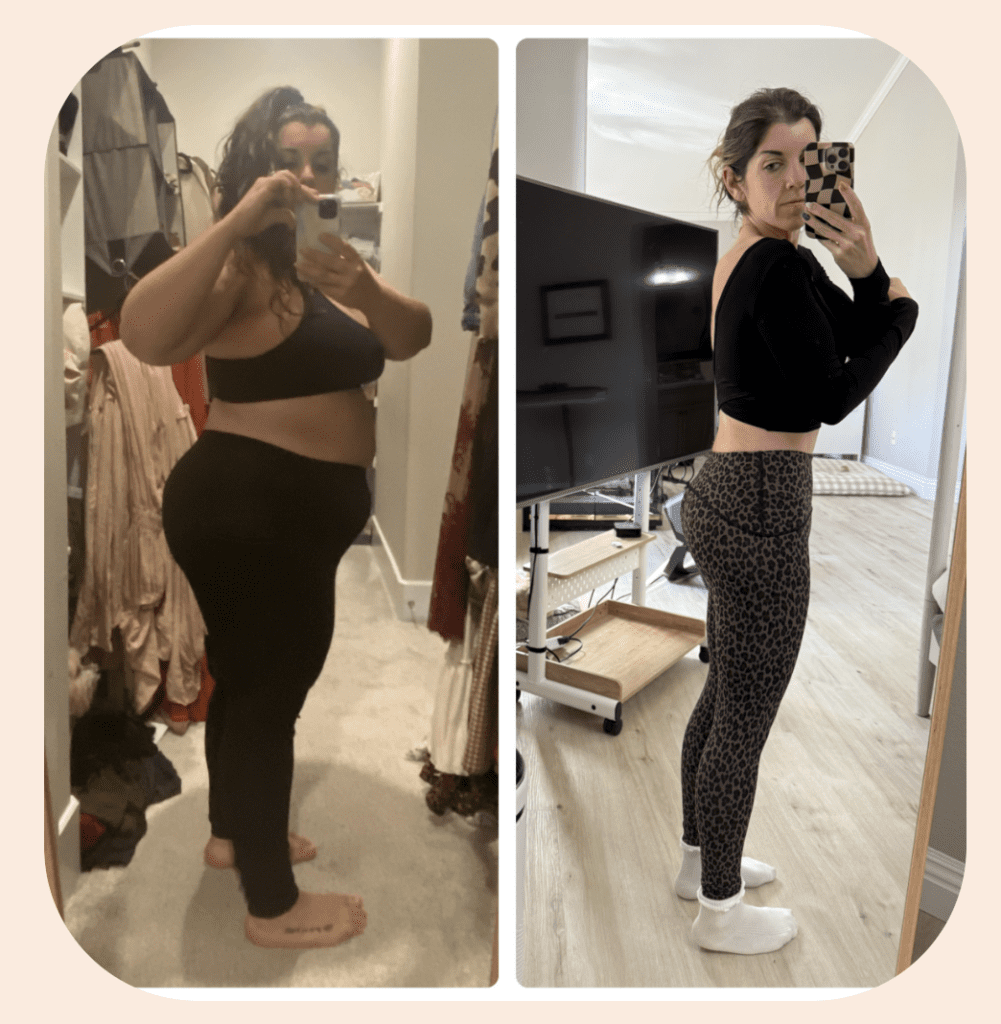
<figure>
<img src="/assets/images/blog/avoiding-muscle-loss-on-glp-1-what-actually-works-from-someone-whos-done-it/ozempic-protein-needs-calculator.jpg-1001x1024.png" alt="A before and after photo of an obese white girl on the left and she is down 155 lbs on the right. she is wearing a black workout set in each photo. " />
</figure>

<p>I don’t just talk about this stuff, I live it. Here’s what maintaining muscle on GLP-1s has done for me:</p>

<p><strong>Body composition:</strong></p>

<ul>
  <li>Lost 155 pounds total</li>
  <li>Current body fat: <strong>13%</strong> (DEXA scan confirmed—this is considered athletic/elite for women)</li>
  <li>Lost approximately 135-145 lbs of pure fat</li>
  <li>GAINED 10-15 lbs of muscle during my weight loss journey</li>
  <li>For context: 13% body fat puts me in the top tier for female athletes</li>
</ul>

<p><strong>Physical changes:</strong></p>

<ul>
  <li>Visible muscle definition in arms, shoulders, legs</li>
  <li>Flat stomach with visible ab lines</li>
  <li>Minimal loose skin (muscle fills it out)</li>
  <li>Fit into size 2 clothes, not just “smaller” sizes</li>
</ul>

<p><strong>Functional fitness:</strong></p>

<ul>
  <li>Can carry all my groceries in one trip</li>
  <li>Keep up with my three kids without being winded</li>
  <li>Have energy for long shifts</li>
  <li>Feel STRONG, not just “skinny”</li>
</ul>

<h2 id="your-action-plan-to-avoid-muscle-loss-on-glp-1">Your Action Plan to Avoid Muscle Loss on GLP-1</h2>

<p>Okay, enough science and theory. Here’s exactly what to do starting TODAY:</p>

<h3 id="week-1-baseline">Week 1: Baseline</h3>

<p><strong>Day 1-2:</strong></p>

<ul>
  <li>Calculate your protein target (goal weight × 0.8-1.0)</li>
  <li>Take measurements and photos</li>
  <li>Download MyFitnessPal or Cronometer</li>
</ul>

<p><strong>Day 3-7:</strong></p>

<ul>
  <li>Track everything you eat for one week</li>
  <li>Find a gym or workout program (F45, Orangetheory, home program)</li>
  <li>Schedule 3 resistance training sessions for next week</li>
</ul>

<h3 id="week-2-4-build-habits">Week 2-4: Build Habits</h3>

<ul>
  <li>Hit protein target 5-6 days per week</li>
  <li>Complete 3 resistance training sessions per week</li>
  <li>Track your workouts (weights used, reps)</li>
  <li>Weigh once per week, same day/time</li>
</ul>

<h3 id="week-5-8-progressive-overload">Week 5-8: Progressive Overload</h3>

<ul>
  <li>Increase resistance training to 4 days per week</li>
  <li>Increase weights by 5-10% when exercises feel easy</li>
  <li>Continue hitting protein targets</li>
  <li>Take new photos and measurements</li>
</ul>

<h3 id="week-9-12-assess-and-adjust">Week 9-12: Assess and Adjust</h3>

<ul>
  <li>Compare photos from Week 1</li>
  <li>Check strength progress (can you lift more?)</li>
  <li>Measure inches lost</li>
  <li>Adjust plan based on results</li>
</ul>

<h2 id="supplements-that-actually-help-and-dont">Supplements That Actually Help (And Don’t)</h2>

<p>I’m not big on supplements, but there are a few that make sense:</p>

<p><strong>Worth taking:</strong></p>

<ul>
  <li><strong>Protein powder</strong> (whey or plant based) – Helps hit protein targets</li>
  <li><strong>Creatine monohydrate</strong> (5g daily) – Supports muscle strength and size</li>
  <li><strong>Vitamin D</strong> (if deficient) – Supports muscle function</li>
  <li><strong>Multivitamin</strong> – Covers nutritional gaps when eating less</li>
</ul>

<p><strong>Not worth it:</strong></p>

<ul>
  <li>BCAAs (you get enough from protein)</li>
  <li>Fat burners (you’re already in a deficit)</li>
  <li>Testosterone boosters (don’t work)</li>
  <li>Most “muscle building” supplements</li>
</ul>

<h2 id="the-bottom-line-on-muscle-loss-and-glp-1-medications">The Bottom Line on Muscle Loss and GLP-1 Medications</h2>

<p>Here’s what I need you to understand:</p>

<p><strong>GLP-1 medications are incredible tools for weight loss</strong>, but the medication doesn’t care if you lose fat or muscle. It simply suppresses your appetite and helps you eat less.</p>

<p><strong>YOU are in charge of what you lose.</strong></p>

<p>If you prioritize protein and resistance training, you’ll lose fat and keep (or even build) muscle. If you just eat whatever, skip workouts, and focus only on the scale, you’ll end up “skinny fat” and weak. Might sound harsh, but it’s true.</p>

<p>I chose strong and sustainable. My goal is to keep up with my grandkids, which starts NOW.</p>

<p>You can too.</p>

<h2 id="your-next-steps">Your Next Steps</h2>

<ol>
  <li><strong>Calculate your protein target</strong> (goal weight × 0.8-1.0)</li>
  <li><strong>Find a resistance training program</strong> (gym, F45, home workouts—just START)</li>
  <li><strong>Track your protein for 3 days</strong> to see where you really are</li>
  <li><strong>Schedule 3 workouts this week</strong> and treat them like doctor appointments</li>
  <li><strong>Follow me on TikTok</strong> <a href="https://www.tiktok.com/@jessicarockowitz"><strong>@</strong>JessicaRockowitz</a> for all things behavioral health, psych, and obesity medicine.</li>
</ol>]]></content><author><name>Jessica Rockowitz</name></author><summary type="html"><![CDATA[Let’s chat about muscle loss on a GLP-1. Let me tell you something nobody warned me about when I started my GLP-1 journey: the real challenge isn’t losing…]]></summary><media:thumbnail xmlns:media="http://search.yahoo.com/mrss/" url="https://thatglp1girl.com/assets/images/blog/avoiding-muscle-loss-on-glp-1-what-actually-works-from-someone-whos-done-it/muscle-loss-on-GLP1.jpg" /><media:content medium="image" url="https://thatglp1girl.com/assets/images/blog/avoiding-muscle-loss-on-glp-1-what-actually-works-from-someone-whos-done-it/muscle-loss-on-GLP1.jpg" xmlns:media="http://search.yahoo.com/mrss/" /></entry><entry><title type="html">What I Wish I Knew Before Starting GLP-1 Medications</title><link href="https://thatglp1girl.com/2026/01/04/what-i-wish-i-knew-before-starting-glp-1-medications/" rel="alternate" type="text/html" title="What I Wish I Knew Before Starting GLP-1 Medications" /><published>2026-01-04T00:00:00+00:00</published><updated>2026-01-04T00:00:00+00:00</updated><id>https://thatglp1girl.com/2026/01/04/what-i-wish-i-knew-before-starting-glp-1-medications</id><content type="html" xml:base="https://thatglp1girl.com/2026/01/04/what-i-wish-i-knew-before-starting-glp-1-medications/"><![CDATA[<p>When I took my first dose of <a href="https://www.mayoclinic.org/drugs-supplements/tirzepatide-subcutaneous-route/description/drg-20534045">tirzepatide</a>, I thought it’d be no big deal and that I could wing it as I went along. After all, I’d done my research and had been in healthcare for quite some time. I understood the risks and benefits, so I naturally figured that I’d be all set. Turns out that starting GLP-1 medications was more complicated than I thought.</p>

<p>Here’s what nobody tells you: <strong>the practical, day-to-day stuff that makes or breaks your GLP-1 experience doesn’t show up in the prescribing information.</strong></p>

<p>I’ve now lost 155 pounds, maintained at 13% body fat, and I’m stronger than I’ve ever been. However, I made mistakes in the beginning that cost me time, energy, and muscle mass. If you’re about to start Ozempic, Wegovy, Mounjaro, or Zepbound—or you’re a few weeks in and feeling lost—here are the 5 things I desperately wish someone had told me on Day One.</p>

<h2 id="1-not-being-hungry-doesnt-mean-you-shouldnt-eat">1. Not Being Hungry Doesn’t Mean You Shouldn’t Eat</h2>

<p><strong>What I thought:</strong> “Finally! I’m not hungry. I’ll just eat when my body tells me to.”</p>

<p><strong>What actually happened:</strong> I was eating around 1,000 calories a day, felt exhausted, lost muscle along with fat, and my hair started thinning.</p>

<p><strong>The reality:</strong> Your body still needs protein, fiber, and enough calories to support your metabolism. Appetite suppression means the medication is working, but eating strategically is still YOUR job. I didn’t figure out how to structure meals for non-hungry days until Week 8. I wish I’d known from Day 1 what to eat, when to eat it, and how much was actually <em>enough</em>.</p>

<p><strong>→ The <a href="https://thatglp1girl.com/glp-1-beginner-survival-kit">Beginner Survival Kit</a> includes meal structures for low appetite days, minimum nutrition goals, and exactly how to eat when you’re not hungry.</strong></p>

<h2 id="2-the-first-month-is-rough-but-nobody-warns-you-how-rough">2. The First Month Is Rough (But Nobody Warns You How Rough)</h2>

<p><strong>What I thought:</strong> “Side effects? I’ll power through.”</p>

<p><strong>What actually happened:</strong> Week 2 hit me like a truck. Nausea, fatigue, constipation, brain fog. I almost quit because I didn’t know this was <em>normal</em> and <em>temporary</em>.</p>

<p><strong>The reality:</strong> Your body is adjusting to slower digestion and different hunger signals. Most people feel significantly better by Week 4, but you need a game plan to get through those first few weeks. I spent hours Googling “is this normal on Mounjaro” at 2am. I wish I’d had a week-by-week guide that told me what to expect and what to do about it.</p>

<p><strong>→ The <a href="https://thatglp1girl.com/glp-1-beginner-survival-kit">Survival Kit</a> breaks down what’s normal vs. concerning for Weeks 1-4, plus exactly which supplements and strategies help each symptom.</strong></p>

<h2 id="3-youll-lose-muscle-unless-you-fight-for-it">3. You’ll Lose Muscle Unless You Fight For It</h2>

<p><strong>What I thought:</strong> “The scale is going down, I must be doing it right.”</p>

<p><strong>What actually happened:</strong> I was losing weight, yes, but I was also losing strength, and my body composition wasn’t changing the way I wanted.</p>

<p><strong>The reality:</strong> Without enough protein (0.8-1.0g per pound of goal weight) and resistance training, you WILL lose muscle on GLP-1s. And muscle loss = slower metabolism = harder to maintain results. It took me months to figure out the protein-timing-training combination that preserved my muscle. Four months of suboptimal results that I can’t get back.</p>

<p><strong>→ The <a href="https://thatglp1girl.com/glp-1-beginner-survival-kit">Survival Kit</a> includes your exact protein targets, meal timing strategies, and a simple strength training framework to protect your muscle from Day 1.</strong></p>

<h2 id="4-side-effects-have-solutions-you-just-need-to-know-what-they-are">4. Side Effects Have Solutions (You Just Need to Know What They Are)</h2>

<p><strong>What I thought:</strong> “I’ll deal with constipation if it happens.”</p>

<p><strong>What actually happened:</strong> By Day 10, I was miserable. Then came the nausea. Then the bloating. I was playing whack-a-mole with symptoms and had no idea which supplements actually worked.</p>

<p><strong>The reality:</strong> Magnesium for constipation. Ginger for nausea. Digestive enzymes for bloating. Eating slowly and avoiding certain foods. There are real, practical solutions—but you need to know them BEFORE you’re desperate. I spent hundreds on random supplements trying to figure out what worked. Most didn’t, and some made things worse.</p>

<p><strong>→ The <a href="https://thatglp1girl.com/glp-1-beginner-survival-kit">Survival Kit</a> includes a symptom-by-symptom toolkit with specific products, dosages, and timing so you’re not guessing.</strong></p>

<h2 id="5-more-than-weight-loss-this-is-identity-work">5. More Than Weight Loss, This is Identity Work</h2>

<p><strong>What I thought:</strong> “I’ll lose the weight, then figure out maintenance.”</p>

<p><strong>What actually happened:</strong> When the weight came off and food stopped being my emotional crutch, I had to figure out who I was without it.</p>

<p><strong>The reality:</strong> GLP-1s quiet the food noise, but they don’t fix the emotional reasons you were using food in the first place. The habits you build while your appetite is suppressed are what determine whether you keep the weight off. This was admittedly the hardest part for me. I had to learn new coping strategies, build new routines, and create an identity beyond “the person trying to lose weight.”</p>

<p><strong>→ The <a href="https://thatglp1girl.com/glp-1-beginner-survival-kit">Survival Kit</a> includes mindset shifts, journaling prompts, and identity anchoring exercises to help you build a foundation that lasts beyond the medication.</strong></p>

<h2 id="heres-what-i-wish-id-had-on-day-1">Here’s What I Wish I’d Had on Day 1</h2>

<p>A <strong>roadmap</strong>. Not a restrictive diet or a list of rules, but a practical guide that told me:</p>

<ul>
  <li>What to expect each week</li>
  <li>How to eat when I wasn’t hungry</li>
  <li>Which side effects were normal and how to manage them</li>
  <li>How to protect my muscle and metabolism</li>
  <li>How to build habits that would carry me through maintenance</li>
</ul>

<p>That’s why I created the <strong><a href="https://thatglp1girl.com/glp-1-beginner-survival-kit">That GLP-1 Girl Beginner Survival Kit.</a></strong> It has everything you need to know about starting GLP-1 medications.</p>

<p>It’s everything I learned the hard way, condensed into a step-by-step companion guide for your first months on GLP-1 medications.</p>

<p><strong>Inside you’ll find:</strong></p>

<ul>
  <li>Week-by-week expectations and what’s normal vs. concerning</li>
  <li>Meal structures and minimum nutrition goals for low-appetite days</li>
  <li>Side effect management toolkit (supplements, timing, what actually works)</li>
  <li>Movement strategies to preserve muscle and boost metabolism</li>
  <li>Mindset work and identity shifts for long-term success</li>
  <li>Social situations, travel tips, and real-life flexibility</li>
</ul>

<p><strong>This IS NOT a diet plan; it’s your Day 1 playbook.</strong></p>

<p>It’s the guide I desperately needed when I started, so you don’t have to figure it out the hard way like I did. Starting on a GLP-1 medication shouldn’t be hard!</p>

<p><strong>Snag it <a href="https://thatglp1girl.com/glp-1-beginner-survival-kit">here!</a></strong></p>

<h2 id="dont-make-the-mistakes-i-made">Don’t Make the Mistakes I Made</h2>

<p>Starting GLP-1 medications without a plan is like showing up to a marathon without training. Sure, you might finish, but you’ll suffer way more than you need to.</p>

<p>I lost time, muscle, and energy because I didn’t know what I was doing. You don’t have to.</p>

<p><strong>Ready to start strong and stay consistent?</strong> Grab the <a href="https://thatglp1girl.com/glp-1-beginner-survival-kit">Beginner GLP-1 Survival Kit</a> and let’s do this the right way from Day One.</p>]]></content><author><name>Jessica Rockowitz</name></author><summary type="html"><![CDATA[When I took my first dose of tirzepatide, I thought it’d be no big deal and that I could wing it as I went along. After all, I’d done my research and had been…]]></summary><media:thumbnail xmlns:media="http://search.yahoo.com/mrss/" url="https://thatglp1girl.com/assets/images/blog/what-i-wish-i-knew-before-starting-glp-1-medications/beginner-guide-for-glp-1-user.jpg" /><media:content medium="image" url="https://thatglp1girl.com/assets/images/blog/what-i-wish-i-knew-before-starting-glp-1-medications/beginner-guide-for-glp-1-user.jpg" xmlns:media="http://search.yahoo.com/mrss/" /></entry><entry><title type="html">My Workout Routine On A GLP-1</title><link href="https://thatglp1girl.com/2026/01/04/workout-routine-on-glp-1/" rel="alternate" type="text/html" title="My Workout Routine On A GLP-1" /><published>2026-01-04T00:00:00+00:00</published><updated>2026-01-04T00:00:00+00:00</updated><id>https://thatglp1girl.com/2026/01/04/workout-routine-on-glp-1</id><content type="html" xml:base="https://thatglp1girl.com/2026/01/04/workout-routine-on-glp-1/"><![CDATA[<p>One of the biggest questions I get centers around my workout routine on GLP-1 medications, particularly in maintenance mode now that I’ve lost the weight and kept it off.</p>

<p>Here’s my weekly schedule: I resistance train 4 days per week, take spin once a week, do yoga or Pilates once a week, and will supplement the last day as either a complete rest day or another resistance training day. I’m 5’5″, 125 pounds, at 13% body fat (DEXA verified), and maintaining my 155 pound weight loss. This workout split is what allows me to eat 2000+ calories per day while staying lean and strong.</p>

<p>As a certified personal trainer, I design my own routines and am a <a href="https://www.equinox.com/referrals/003WR00000mfU05YAE">proud Equinox member</a>. If you’re in maintenance mode on Ozempic, Wegovy, Mounjaro, or Zepbound and want to maintain muscle while eating more, this is your blueprint.</p>

<h2 id="my-weekly-workout-schedule">My Weekly Workout Schedule</h2>

<p><strong>Monday: Lower Body (Legs/Glutes)</strong><br />
<strong>Tuesday: Upper Body (Back/Shoulders)</strong><br />
<strong>Wednesday: Spin Class</strong><br />
<strong>Thursday: Lower Body (Legs/Glutes)</strong><br />
<strong>Friday: Upper Body (Triceps/Biceps)</strong><br />
<strong>Saturday: Yoga or Pilates</strong><br />
<strong>Sunday: Rest</strong> <strong>or Wildcard</strong></p>

<p>This routine hits each muscle group twice per week, which is optimal for muscle maintenance and building strength. It’s the perfect workout routine on a GLP-1 for both losing and maintaining your weight loss.</p>

<h2 id="why-this-split-works-for-glp-1-maintenance">Why This Split Works for GLP-1 Maintenance</h2>

<p><strong>Higher calorie allowance:</strong> More muscle = higher metabolism. I can eat 2000-2200 calories daily and maintain my weight because I’ve built and preserved muscle mass.</p>

<p><strong>Frequency over volume:</strong> Hitting muscles twice per week with moderate volume is more effective than once-per-week splits for maintaining strength and muscle.</p>

<p><strong>Sustainable long-term:</strong> Four weight training days fits real life. I’m a working mom of three and graduate student. This is a schedule I can maintain for years, not just weeks.</p>

<h2 id="breaking-down-each-training-day-my-glp-1-workout-routine">Breaking Down Each Training Day: My GLP-1 Workout Routine</h2>

<h3 id="monday--thursday-lower-body">Monday &amp; Thursday: Lower Body</h3>

<p><strong>Examples of what I do:</strong></p>

<ul>
  <li><strong>Monday:</strong> Squats, Romanian deadlifts, leg press, glute bridges</li>
  <li><strong>Thursday:</strong> Lunges, step-ups, hamstring curls, hip thrusts</li>
</ul>

<p><strong>Why it matters:</strong><br />
Legs are your biggest muscle group. Training them twice weekly burns more calories, builds functional strength, and creates shape. I can squat 185 pounds now, which is significantly more than I weigh.</p>

<p><strong>Time:</strong> 45-60 minutes of lifting followed by 15 minutes of the stairclimber for a cardio finish</p>

<h3 id="tuesday-upper-body-backshoulders">Tuesday: Upper Body (Back/Shoulders)</h3>

<p><strong>Some of what I do:</strong></p>

<ul>
  <li>Pull-ups</li>
  <li>Lat pulldowns</li>
  <li>Bent-over rows</li>
  <li>Shoulder presses</li>
  <li>Lateral raises</li>
</ul>

<p><strong>Why it matters:</strong><br />
Strong back improves posture, prevents injury, and builds that athletic shape.</p>

<p><strong>Time:</strong> 45-50 minutes of lifting followed by 15 minutes of the stairclimber</p>

<h3 id="wednesday-spin-class">Wednesday: Spin Class</h3>

<p>This is my mental health day disguised as cardio. It’s to help with overall fat loss as well as for stress relief, heart health, and endorphins.</p>

<p><strong>Time:</strong> 45 minutes</p>

<h3 id="friday-upper-body-tricepsbiceps">Friday: Upper Body (Triceps/Biceps)</h3>

<p><strong>What I do:</strong></p>

<ul>
  <li>Close-grip bench press</li>
  <li>Skull crushers</li>
  <li>Bicep curls</li>
  <li>Hammer curls</li>
  <li>Tricep pushdowns</li>
</ul>

<p><strong>Why it matters:</strong><br />
Arm strength helps with push-ups, pull-ups, carrying kids and groceries, and looking toned. Let’s be real.</p>

<p><strong>Time:</strong> 45-60 minutes of lifting plus 15 minutes of the stairclimber for a cardio finish</p>

<h3 id="saturday-yoga-or-pilates">Saturday: Yoga or Pilates</h3>

<p>Active recovery. I alternate between yoga (flexibility and calm) and Pilates (core strength and that deep muscle burn). This stretches tight muscles from lifting and strengthens my core, which supports all my lifts.</p>

<p><strong>Time:</strong> 50-60 minutes</p>

<h3 id="sunday-restwildcard">Sunday: Rest/Wildcard</h3>

<p>This day, I take what my body needs. Sometimes it’s a full rest day and a few walks with my dogs. Other days, I have tons of energy and want to get in another resistance or cardio day.</p>

<h2 id="how-i-fuel-these-workouts">How I Fuel These Workouts</h2>

<p><strong>Pre-workout:</strong><br />
Being totally transparent, Isually train fasted or just with coffee. If I’m feeling lower energy, sometimes I’ll make myself a PBJ sandwich.</p>

<p><strong>Post-workout (within 1 hour):</strong><br />
Orgain protein shake (30g protein)—non-negotiable. Sometimes I add an apple or toast if it was a brutal leg day.</p>

<p><strong>Throughout the day:</strong><br />
I hit 120-130g protein total and eat 2000+ calories overall to support training.</p>

<p><strong>What doesn’t work:</strong><br />
Trying to lift heavy on 1000 calories a day. You’ll lose muscle, get weak, and feel terrible. Don’t do it.</p>

<h2 id="if-youre-new-to-weight-training">If You’re New to Weight Training</h2>

<p>Don’t jump into my 4 day split if you’ve never lifted. Start here:</p>

<p><strong>Weeks 1-4: Full Body, 2x Per Week</strong></p>

<ul>
  <li>Bodyweight squats, push-ups, rows, planks</li>
  <li>Learn form, build the habit</li>
</ul>

<p><strong>Weeks 5-8: Full Body, 3x Per Week</strong></p>

<ul>
  <li>Add light dumbbells</li>
  <li>Start tracking weights and reps</li>
</ul>

<p><strong>Weeks 9-12: Upper/Lower Split, 4x Per Week</strong></p>

<ul>
  <li>Now you’re ready for my split</li>
  <li>Focus on progressive overload (gradually increasing weight)</li>
</ul>

<h2 id="the-progressive-overload-principle">The Progressive Overload Principle</h2>

<p>This is the secret: <strong>you must gradually increase the challenge.</strong></p>

<p>Every 2-4 weeks, you should do one or more of the following:</p>

<ul>
  <li>Increase weight by 5-10 pounds</li>
  <li>Add more reps</li>
  <li>Add another set</li>
  <li>Decrease rest time</li>
</ul>

<p>I track workouts in my Notes app:</p>

<ul>
  <li>Exercise name</li>
  <li>Weight used</li>
  <li>Reps completed</li>
</ul>

<p>This lets me see progress and push myself appropriately.</p>

<h2 id="biggest-mistakes-i-see">Biggest Mistakes I See</h2>

<p><strong>Mistake #1: Only doing cardio</strong><br />
Walking and spin will NOT preserve muscle. You must lift weights.</p>

<p><strong>Mistake #2: Lifting too light</strong><br />
“Toning” with 5-pound dumbbells won’t cut it. You should struggle on the last 2-3 reps.</p>

<p><strong>Mistake #3: Skipping when tired</strong><br />
Yes, GLP-1s make you tired. Go anyway. I’ve never regretted a workout, only skipping one.</p>

<p><strong>Mistake #4: Not tracking progress</strong><br />
If you’re squatting the same weight for 6 months, you’re not progressing.</p>

<h2 id="the-bottom-line">The Bottom Line</h2>

<p>This split is how I maintained muscle while losing 155 pounds on a GLP-1. It’s sustainable, effective, and fits into a busy life. You don’t need two hour gym sessions or 6 training days per week; you need consistency, progressive overload, and enough protein to support your training.</p>

<p><strong>Your action step:</strong> Schedule 2 workouts this week. Put them in your calendar. Show up even when you don’t feel like it.</p>

<p><strong>Want my complete workout programs with exercise demos and progression plans?</strong> Check it out <a href="https://thatglp1girl.com/glp-1-girl-workout-starter-pack">here.</a></p>]]></content><author><name>Jessica Rockowitz</name></author><summary type="html"><![CDATA[One of the biggest questions I get centers around my workout routine on GLP-1 medications, particularly in maintenance mode now that I’ve lost the weight and…]]></summary><media:thumbnail xmlns:media="http://search.yahoo.com/mrss/" url="https://thatglp1girl.com/assets/images/blog/workout-routine-on-glp-1/workout-routine-on-glp-1.jpg" /><media:content medium="image" url="https://thatglp1girl.com/assets/images/blog/workout-routine-on-glp-1/workout-routine-on-glp-1.jpg" xmlns:media="http://search.yahoo.com/mrss/" /></entry><entry><title type="html">How Much Protein Do You REALLY Need on GLP-1 Medications? A Nurse’s Guide</title><link href="https://thatglp1girl.com/2026/01/03/how-much-protein-do-you-really-need-on-glp1-medications/" rel="alternate" type="text/html" title="How Much Protein Do You REALLY Need on GLP-1 Medications? A Nurse’s Guide" /><published>2026-01-03T00:00:00+00:00</published><updated>2026-01-03T00:00:00+00:00</updated><id>https://thatglp1girl.com/2026/01/03/how-much-protein-do-you-really-need-on-glp1-medications</id><content type="html" xml:base="https://thatglp1girl.com/2026/01/03/how-much-protein-do-you-really-need-on-glp1-medications/"><![CDATA[<p>If you’re on Ozempic, Wegovy, Mounjaro, or Zepbound, you’ve probably heard conflicting advice about protein. Some people say you need way more protein on GLP-1s, while others claim it doesn’t matter as long as you’re eating <em>something</em>. And then there’s the crowd insisting you’ll waste away to nothing if you don’t hit some impossibly high number.</p>

<p>So, then, what’s the truth?</p>

<p>As an Ivy League education psychiatric registered nurse who’s lost 155 pounds on GLP-1 medications while maintaining my muscle mass through heavy lifting, I’m here to give you the real answer, backed by science, informed by my clinical background, and proven by my own experience.</p>

<p>Let’s cut through the noise and talk about how much protein you <em>actually</em> need on semaglutide, tirzepatide, or any other GLP-1 medication.</p>

<h2 id="why-protein-matters-even-more-on-glp-1-medications">Why Protein Matters Even More on GLP-1 Medications</h2>

<p>Here’s the thing: GLP-1 medications are incredibly effective at helping you lose weight. I’m living proof! But here’s what nobody tells you when you start: <strong>your body doesn’t discriminate between fat loss and muscle loss when you’re in a caloric deficit.</strong></p>

<p>When you’re eating significantly less (thanks to that appetite suppression we all know and love), your body needs a signal to hold onto your muscle. What’s that signal? <strong>Protein</strong>!</p>

<h3 id="what-happens-when-you-dont-get-enough-protein-on-glp-1s">What Happens When You Don’t Get Enough Protein on GLP-1s</h3>

<p>I’ve seen this happen to people in online communities, and honestly, it breaks my heart:</p>

<ul>
  <li><strong>Muscle loss</strong> (which slows your metabolism and makes you look “skinny fat” and saggy)</li>
  <li><strong>Fatigue and weakness</strong> (your body is literally breaking down muscle for energy)</li>
  <li><strong>Hair thinning or loss</strong> (your body prioritizes vital functions over hair growth)</li>
  <li><strong>Saggy, loose skin</strong> (muscle provides structure under your skin)</li>
  <li><strong>Difficulty maintaining weight loss</strong> (less muscle = lower metabolic rate)</li>
</ul>

<p>I’m not trying to scare you. I’m trying to save you from what I see happening to so many people who focus <em>only</em> on the scale number.</p>

<h2 id="the-science-so-how-much-protein-do-you-need-on-glp-1-medications">The Science: So How Much Protein Do You Need on GLP-1 Medications?</h2>

<p>Let’s talk actual numbers. Research on protein needs during weight loss is pretty clear, and it applies even more when you’re on appetite suppressing medications.</p>

<h3 id="the-general-recommendation">The General Recommendation</h3>

<p><strong>For people on GLP-1 medications who want to preserve muscle mass, aim for 0.8 to 1.0 grams of protein per pound of your goal body weight.</strong></p>

<p>Let me break that down:</p>

<ul>
  <li>If your goal weight is 150 lbs → Aim for <strong>120-150 grams of protein per day</strong></li>
  <li>If your goal weight is 180 lbs → Aim for <strong>145-180 grams of protein per day</strong></li>
  <li>If your goal weight is 200 lbs → Aim for <strong>160-200 grams of protein per day</strong></li>
</ul>

<p>“Wait,” you might be thinking, “that seems like a LOT when I can barely eat!”</p>

<p>I know. Trust me, I know. But here’s the reality: <strong>it’s not optional if you want to keep your muscle.</strong></p>

<h3 id="why-this-number-is-higher-than-normal-recommendations">Why This Number Is Higher Than “Normal” Recommendations</h3>

<p>You might have heard that the RDA (Recommended Dietary Allowance) for protein is only 0.36 grams per pound of body weight. That’s true, BUT that recommendation is for <em>sedentary people who are maintaining their weight.</em></p>

<p>You’re not maintaining. You’re losing! And if you’re smart (which you are, because you’re reading this), you’re also incorporating resistance training.</p>

<p>When you’re in a caloric deficit—which you definitely are on GLP-1s—your protein needs go UP, not down. This is backed by multiple studies showing that higher protein intake during weight loss:</p>

<ul>
  <li>Preserves lean muscle mass</li>
  <li>Increases satiety (helps you feel fuller)</li>
  <li>Supports metabolic rate</li>
  <li>Improves body composition</li>
</ul>

<h2 id="your-personal-protein-calculator">Your Personal Protein Calculator</h2>

<p>Let’s figure out YOUR specific protein target.</p>

<p><strong>Step 1: Determine Your Goal Weight</strong></p>

<p>What’s a realistic, healthy weight for you? Don’t pick some number from high school. Pick a weight where you:</p>

<ul>
  <li>Feel strong and energetic</li>
  <li>Can maintain your lifestyle</li>
  <li>Have a healthy body composition</li>
</ul>

<p><strong>Step 2: Calculate Your Protein Range</strong></p>

<p><strong>Minimum:</strong> Goal Weight × 0.8 = _____ grams per day</p>

<p><strong>Optimal:</strong> Goal Weight × 1.0 = _____ grams per day</p>

<p><strong>Step 3: Adjust Based on Your Activity Level</strong></p>

<ul>
  <li><strong>Sedentary</strong> (little to no exercise): Stick to the lower end (0.8g per lb)</li>
  <li><strong>Lightly active</strong> (walking, light yoga): Aim for middle range (0.9g per lb)</li>
  <li><strong>Moderately active</strong> (regular workouts 3-4x/week): Hit the higher end (1.0g per lb)</li>
  <li><strong>Very active</strong> (heavy lifting 5+ days/week like me): Consider 1.0-1.2g per lb</li>
</ul>

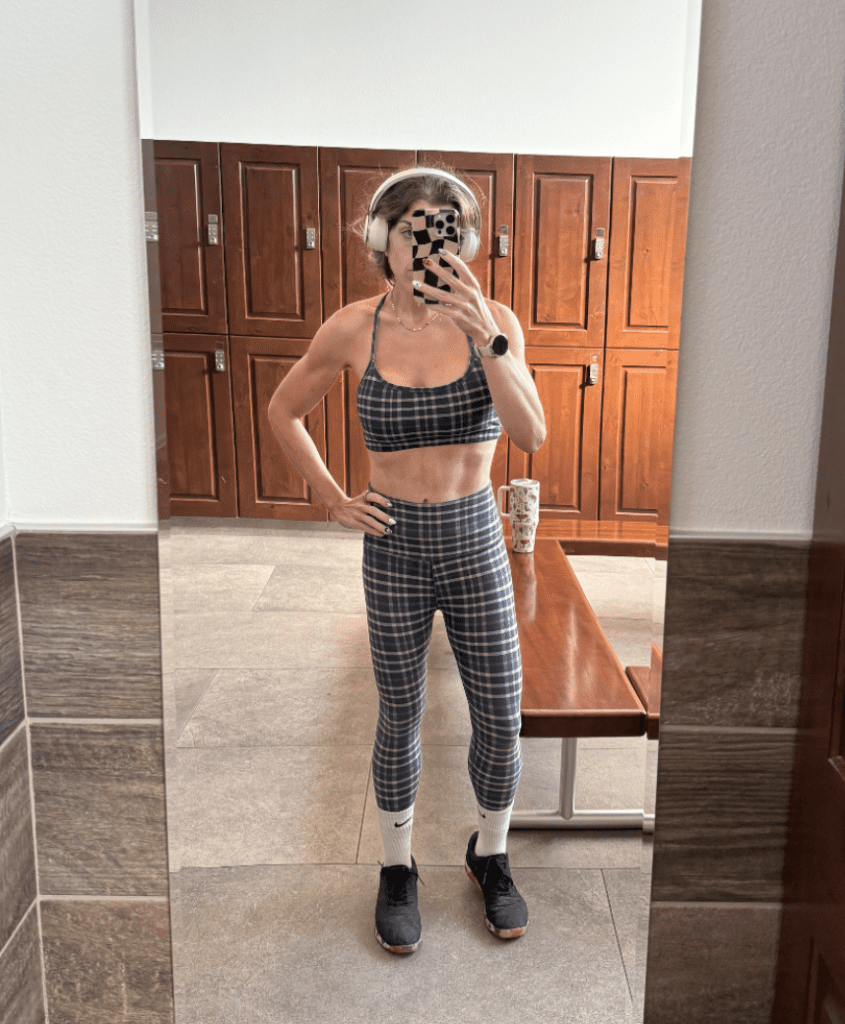
<figure>
<img src="/assets/images/blog/how-much-protein-do-you-really-need-on-glp1-medications/glp1-protein-calculator-845x1024.png" alt="fit girl in plaid workout set posing in the mirror at the gym. " />
</figure>

<h3 id="my-personal-example"><a href="https://thatglp1girl.com/coaching">My Personal Example</a></h3>

<p>I’m currently 125 lbs at 5’5″, and I’m in maintenance mode after losing 155 pounds. Here’s my calculation:</p>

<ul>
  <li><strong>Minimum:</strong> 125 × 0.8 = <strong>100 grams per day</strong></li>
  <li><strong>Optimal:</strong> 125 × 1.0 = <strong>125 grams per day</strong></li>
</ul>

<p>Since I lift heavy 5 days a week plus cardio, I aim for <strong>120-130 grams daily</strong>. Some days I hit 110g and that’s fine. Some days I get 140g. The key is <em>consistency</em>, not perfection.</p>

<p>At my height and activity level, this protein intake helps me maintain the muscle I built during my weight loss journey and supports my strength training goals.</p>

<h2 id="common-mistakes-people-make-with-protein-on-glp-1s">Common Mistakes People Make With Protein on GLP-1s</h2>

<p>In my online communities and through my “That GLP-1 Girl” content, I see these mistakes over and over:</p>

<h3 id="mistake-1-im-not-hungry-so-ill-just-skip-protein">Mistake #1: “I’m Not Hungry, So I’ll Just Skip Protein”</h3>

<p>I get it. The appetite suppression is REAL. Some days, the thought of eating feels like a chore. But defaulting to just carbs or skipping meals entirely because you’re not hungry means you’re missing the nutrients your body desperately needs during weight loss, especially protein and fiber.</p>

<p><strong>The fix:</strong> Prioritize protein FIRST at every meal, but don’t forget fiber. Your plate should look like this:</p>

<ol>
  <li><strong>Protein first</strong> (chicken, fish, eggs, Greek yogurt)</li>
  <li><strong>Fiber rich vegetables second</strong> (broccoli, spinach, Brussels sprouts)</li>
  <li><strong>Healthy carbs last</strong> if you still have room (quinoa, sweet potato, whole grains)</li>
</ol>

<p>This order ensures you’re getting the muscle preserving protein AND the fiber you need for digestion and gut health (trust me, constipation on GLP-1s is no joke). Eating protein with fiber rich veggies also helps with satiety and blood sugar stability.</p>

<h3 id="mistake-2-ill-just-drink-protein-shakes-all-day">Mistake #2: “I’ll Just Drink Protein Shakes All Day”</h3>

<p>Protein shakes are a tool, not a solution. While they’re great for supplementing, relying on them exclusively means you’re missing out on:</p>

<ul>
  <li>Essential nutrients from whole foods</li>
  <li>The satiety benefits of chewing</li>
  <li>The thermic effect of digesting whole proteins (your body burns more calories digesting chicken than powder)</li>
</ul>

<p><strong>The fix:</strong> Use shakes strategically (post workout, busy mornings), but aim for at least 2 meals with whole food protein sources.</p>

<h3 id="mistake-3-more-protein--faster-weight-loss">Mistake #3: “More Protein = Faster Weight Loss”</h3>

<p>No. More protein = better muscle preservation. Weight loss comes from being in a caloric deficit, which GLP-1s help you achieve by reducing appetite amongst other things.</p>

<p>Eating 200+ grams of protein won’t make you lose faster. It might actually slow your loss if it puts you in a caloric surplus.</p>

<p><strong>The fix:</strong> Hit your protein target, but don’t go overboard thinking it’s magic.</p>

<h3 id="mistake-4-i-can-get-all-my-protein-at-dinner">Mistake #4: “I Can Get All My Protein at Dinner”</h3>

<p>Your body can only synthesize so much muscle protein at once. While you won’t “waste” protein from a large meal (your body will use it for other functions), you’ll get better muscle preservation by spreading protein throughout the day.</p>

<p><strong>The fix:</strong> Aim for 30-50 grams of protein per meal, 3-4 times per day.</p>

<h3 id="mistake-5-plant-protein-is-just-as-good">Mistake #5: “Plant Protein Is Just as Good”</h3>

<p>Look, I’m not anti-plant protein. But the reality is that animal proteins are <em>complete proteins</em> with all essential amino acids in optimal ratios. Most plant proteins are incomplete and less bioavailable.</p>

<p>If you’re vegetarian or vegan, you absolutely CAN get enough protein: you just need to be more strategic about combining sources and likely eating more volume.</p>

<p><strong>The fix:</strong> If you eat animal products, include them. If you don’t, focus on complete plant proteins like quinoa, soy, and combine legumes with grains.</p>

<h2 id="how-to-actually-hit-your-protein-goals-when-youre-not-hungry">How to Actually Hit Your Protein Goals When You’re Not Hungry</h2>

<p>This is the million dollar question, right? Here’s what works for me:</p>

<h3 id="strategy-1-protein-dense-foods">Strategy #1: Protein-Dense Foods</h3>

<p>Choose foods that pack maximum protein in minimum volume:</p>

<ul>
  <li><strong>Greek yogurt</strong> (20g protein in 1 cup)</li>
  <li><strong>Cottage cheese</strong> (25g protein in 1 cup)</li>
  <li><strong>Chicken breast</strong> (50g protein in 6 oz)</li>
  <li><strong>Eggs</strong> (6g protein each)</li>
  <li><strong>Salmon</strong> (40g protein in 6 oz)</li>
  <li><strong>Protein powder</strong> (20-30g per scoop)</li>
</ul>

<h3 id="strategy-2-liquid-calories-are-easier">Strategy #2: Liquid Calories Are Easier</h3>

<p>When solid food feels impossible, liquids go down easier:</p>

<ul>
  <li>Protein smoothies with Greek yogurt, protein powder, and fruit</li>
  <li>Protein coffee (add protein powder to your morning coffee)</li>
  <li>Bone broth (yes, it has protein!)</li>
  <li>Orgain protein shakes (30g protein, tastes like chocolate milk)</li>
</ul>

<h3 id="strategy-3-front-load-your-protein">Strategy #3: Front Load Your Protein</h3>

<p>Eat protein when you’re hungriest, usually earlier in the day:</p>

<ul>
  <li>Protein packed breakfast (eggs, Greek yogurt, protein pancakes)</li>
  <li>High protein lunch</li>
  <li>Lighter dinner if appetite is gone by evening</li>
</ul>

<h3 id="strategy-4-make-every-bite-count">Strategy #4: Make Every Bite Count</h3>

<p>When you can only eat small amounts, make it protein:</p>

<ul>
  <li>Skip the bread, eat the turkey</li>
  <li>Pass on chips, have the chicken</li>
  <li>Choose protein bars over granola bars</li>
</ul>

<h2 id="what-this-looks-like-in-real-life">What This Looks Like in Real Life</h2>

<p>Here’s a sample day of eating for me to hit 150g protein:</p>

<p><strong>Breakfast (7am):</strong></p>

<ul>
  <li>3 eggs scrambled (18g)</li>
  <li>1/2 cup cottage cheese mixed in (12g)</li>
  <li>1 slice whole grain toast</li>
  <li><strong>Total: 30g protein</strong></li>
</ul>

<p><strong>Mid Morning (10am):</strong></p>

<ul>
  <li>Orgain protein shake (30g)</li>
  <li><strong>Total: 30g protein</strong></li>
</ul>

<p><strong>Lunch (1pm):</strong></p>

<ul>
  <li>6 oz grilled chicken breast (50g)</li>
  <li>Side salad with vinaigrette</li>
  <li><strong>Total: 50g protein</strong></li>
</ul>

<p><strong>Afternoon Snack (4pm):</strong></p>

<ul>
  <li>Greek yogurt with berries (20g)</li>
  <li><strong>Total: 20g protein</strong></li>
</ul>

<p><strong>Dinner (6:30pm):</strong></p>

<ul>
  <li>5 oz salmon (35g)</li>
  <li>Roasted vegetables</li>
  <li><strong>Total: 35g protein</strong></li>
</ul>

<p><strong>Daily Total: 165g protein</strong></p>

<p>Notice I’m not eating huge volumes. I’m strategic about WHAT I eat.</p>

<h2 id="when-to-worry-and-when-to-relax">When to Worry (And When to Relax)</h2>

<h3 id="you-should-be-concerned-if">You Should Be Concerned If:</h3>

<ul>
  <li>You’re consistently getting less than 0.6g per lb of goal weight</li>
  <li>You’re noticing muscle loss or weakness</li>
  <li>Your hair is thinning significantly</li>
  <li>You’re exhausted all the time despite adequate sleep</li>
  <li>You’re losing weight too rapidly (more than 2 lbs per week consistently)</li>
</ul>

<h3 id="youre-doing-fine-if">You’re Doing Fine If:</h3>

<ul>
  <li>You’re hitting 0.8-1.0g per lb most days</li>
  <li>You have energy for your workouts</li>
  <li>You’re maintaining or building strength</li>
  <li>Your hair, skin, and nails look healthy</li>
  <li>You’re losing 1-2 lbs per week on average</li>
</ul>

<h2 id="the-bottom-line-on-protein-and-glp-1-medications">The Bottom Line on Protein and GLP-1 Medications</h2>

<p>Here’s what I want you to remember:</p>

<p><strong>Your protein needs on GLP-1 medications are HIGHER than normal, not lower.</strong> Aim for 0.8-1.0 grams per pound of your goal body weight. It sounds like a lot when you have no appetite, but it’s non-negotiable if you want to keep your muscle.</p>

<p>I lost 155 pounds. I maintained my muscle mass. I’m stronger now than I’ve ever been in my life. And the single most important factor? <strong>Prioritizing protein every single day.</strong></p>

<p>You’re on these medications to transform your life, not just to see a smaller number on the scale. Don’t shortchange yourself by neglecting the one thing that will help you build the strong, healthy body you deserve.</p>

<h2 id="your-action-steps-right-now">Your Action Steps Right Now</h2>

<ol>
  <li><strong>Calculate your protein target</strong> using your goal weight × 0.8-1.0</li>
  <li><strong>Track your protein for 3 days</strong> to see where you actually are (you might be surprised how low it is)</li>
  <li><strong>Identify 5 protein sources</strong> you actually enjoy eating</li>
  <li><strong>Plan tomorrow’s meals</strong> with protein as the priority</li>
  <li><strong>Follow me on</strong> <a href="https://www.tiktok.com/@jessicarockowitz"><strong>TikTok @</strong>JessicaRockowitz</a> for daily tips on all things obesity medicine and mental health!</li>
</ol>

<p>You’ve got this! Your future self—the one who’s not just thin, but STRONG—will thank you for prioritizing protein today.</p>

<p><strong>About the Author:</strong> Jessica is an Ivy League educated registered nurse and a PMHNP student at Vanderbilt University. She’s lost 155 pounds on GLP-1 medications while maintaining muscle mass through consistent resistance training. She shares her journey and evidence based tips on TikTok as @JessicaRockowitz and Instagram as @JessicaRockowitz, where she’s building a community focused on mental health and weight loss.</p>]]></content><author><name>Jessica Rockowitz</name></author><summary type="html"><![CDATA[If you’re on Ozempic, Wegovy, Mounjaro, or Zepbound, you’ve probably heard conflicting advice about protein. Some people say you need way more protein on…]]></summary><media:thumbnail xmlns:media="http://search.yahoo.com/mrss/" url="https://thatglp1girl.com/assets/images/blog/how-much-protein-do-you-really-need-on-glp1-medications/glp1-protein-calculator-2.jpg" /><media:content medium="image" url="https://thatglp1girl.com/assets/images/blog/how-much-protein-do-you-really-need-on-glp1-medications/glp1-protein-calculator-2.jpg" xmlns:media="http://search.yahoo.com/mrss/" /></entry></feed>